Two workshops under one sawtooth roof.
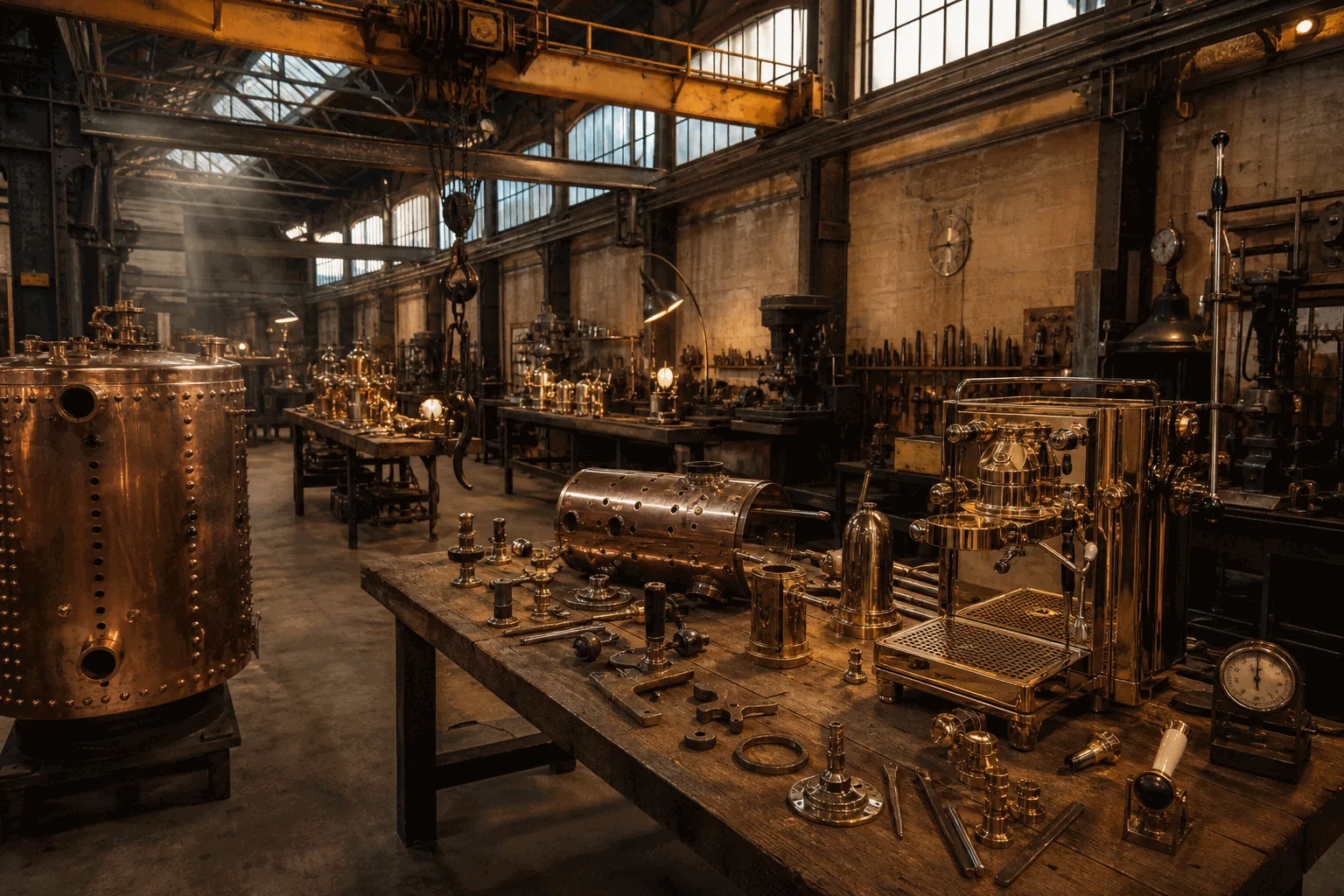
The building poured brass valve bodies for river barges from 1908 until the yards went quiet. When we took the lease in 2016, the sand pits were still in the floor and the crane rail still ran the length of the bay. We kept both. The crane now lifts nine-litre boilers instead of barge fittings, which it appears to regard as a demotion it can live with.
Valve & Vessel started as an argument between its founders — a boilermaker who thinks a machine should show you every working part, and a ceramicist who thinks the best object in the room is the one you stop noticing. Neither won. The company is the argument, held at working pressure ever since: the machines got louder and more legible, the cups got quieter and more precise.
Eleven people work here. Five build machines, three throw and fire, two run service and freight, and one keeps the ledger and answers the phone in a way customers describe as “bracing.”
| Building | 1908 brass foundry, Strip District, Pittsburgh |
|---|---|
| Crew | 11 people, two workshops |
| Machines built | Around 400 a year, every one test-pulled |
| Kiln | Gas reduction, cone 10, fired weekly |
| Brass stock | 94% recycled, melted within 60 miles |
| Test bench | Every boiler proofed at 2× working pressure |
A boilermaker and a ceramicist
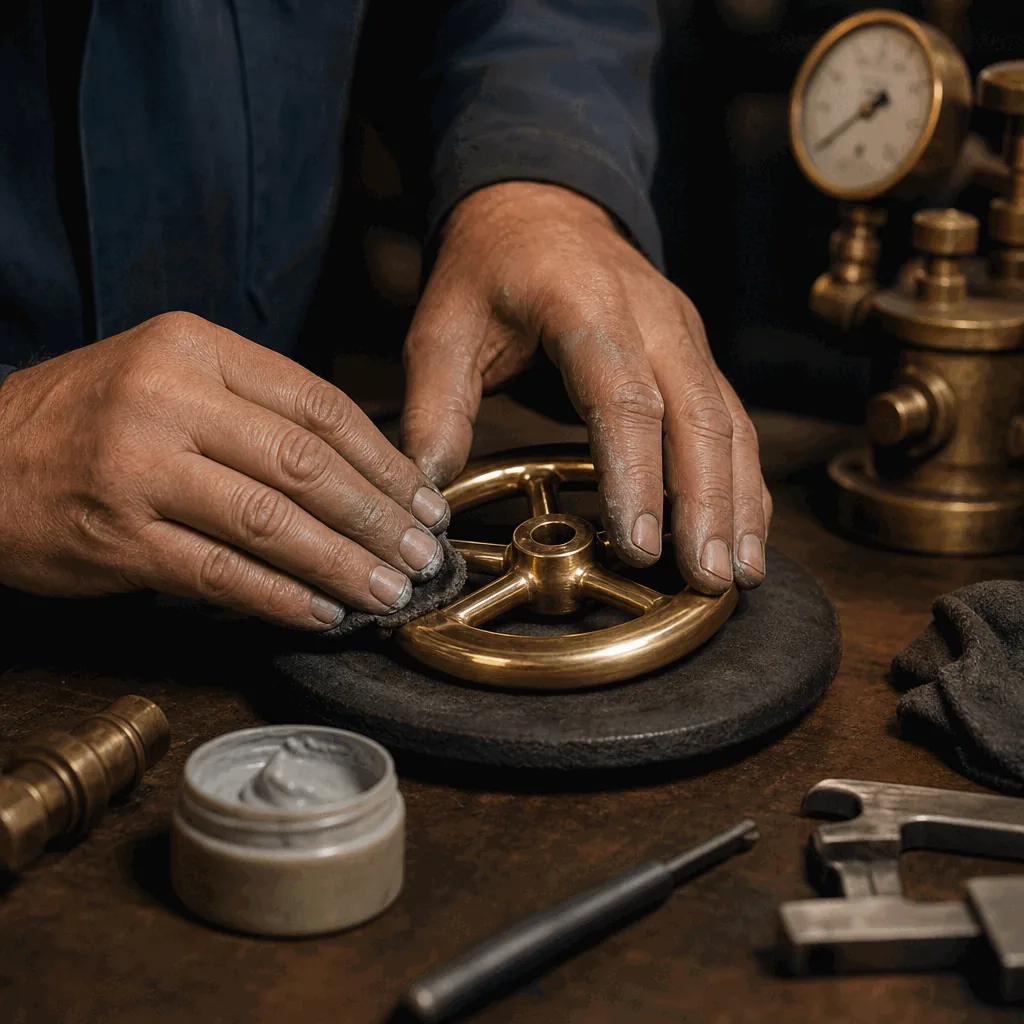
Rhea Callum — the loud workshop
Third-generation boilermaker, apprenticed in ship repair on the Ohio River. Rhea laps every valve seat on the commercial machines herself and maintains that a gauge you can’t trust is worse than no gauge at all. Her test bench log runs to fourteen notebooks.
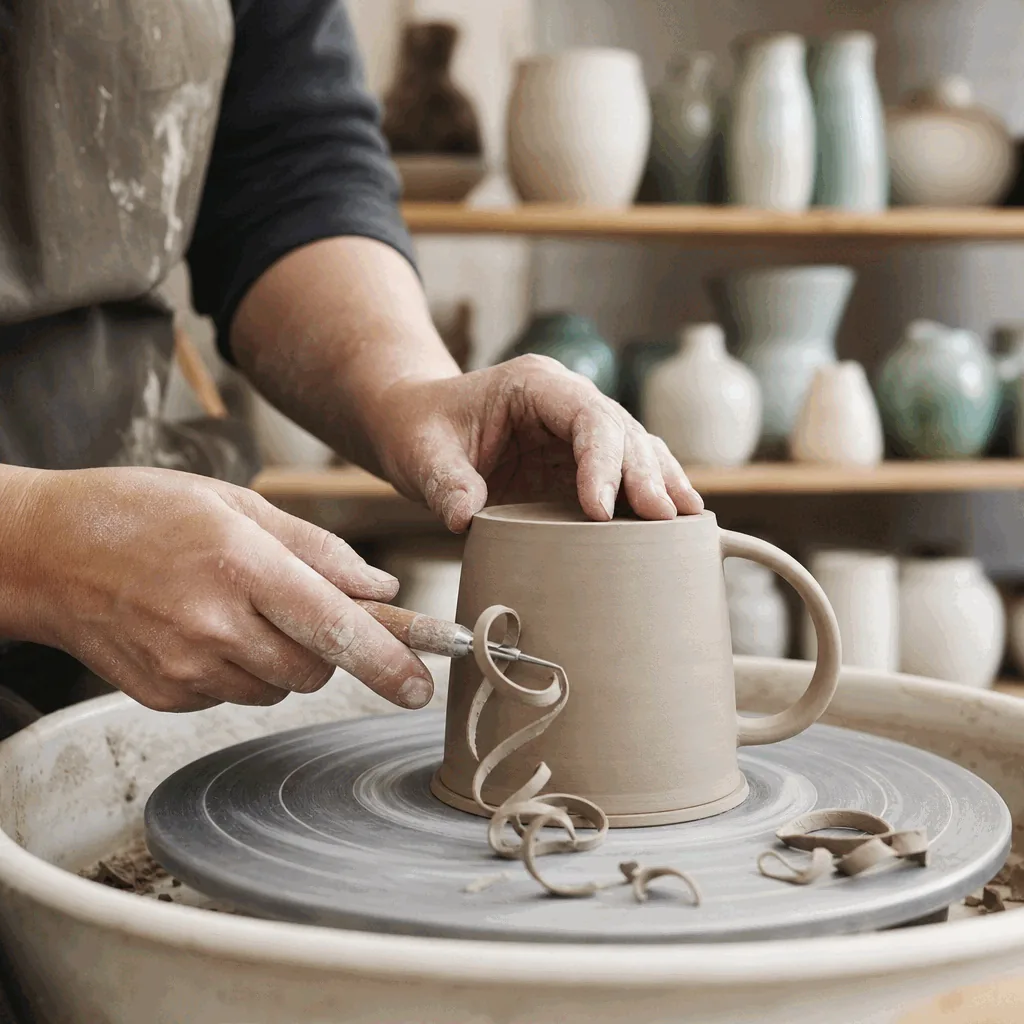
Emil Varga — the quiet workshop
Trained in production pottery in Pécs before a decade of studio work in the States. Emil mixes every glaze batch by hand, numbers the kiln loads, and once spent eight months adjusting a mug lip by half a millimetre. He considers this efficient, because now it’s done.
Brass with a previous life
Ninety-four percent of our brass starts as scrap — plumbing fittings, shell casings, the odd trombone — melted and rolled within sixty miles of the foundry. Recycled brass isn’t a compromise; it’s better stock, already stress-relieved by its first life. The stoneware side runs a closed water loop and the kiln waste-heat warms the machine floor all winter, which the boilermakers accept without publicly thanking the potters.
| Recycled brass share | 94% by mass |
|---|---|
| Melt radius | Under 60 miles |
| Clay reclaim | 100% of trimmings re-pugged |
| Kiln waste-heat | Heats the machine floor Nov–Mar |
| Packaging | Molded pulp & pine crates, zero foam |
Tours Friday & Saturday, 10:00–16:00
Watch a boiler brazed and a mug thrown in the same hour. Espresso is pulled at the test bench; the cup you drink from is for sale, and yes, that is a deliberate trap.
Book a tour via the desk